Harud: the autumn harvest in Kashmir
Harud is the Kashmiri word for autumn, the harvest season. What September to November looks like in the valley, from the chinar to walnuts and saffron.
3 min read
Harud is the Kashmiri word for autumn. It means harvest time. From September to November the valley changes colour, the orchards are at their busiest, and the year's walnuts and saffron come in. It is the season this shop is named after, and this is a short account of what the autumn harvest in Kashmir looks like.
The chinar turns
The first sign is the chinar, the great plane tree of Kashmir's gardens and roadsides. In autumn its leaves turn from green to amber to deep red. The name chinar is often traced to the Persian che-nar, “what a fire”, after that colour. Later in the season the leaves fall in thick carpets that crunch underfoot.
Walnuts
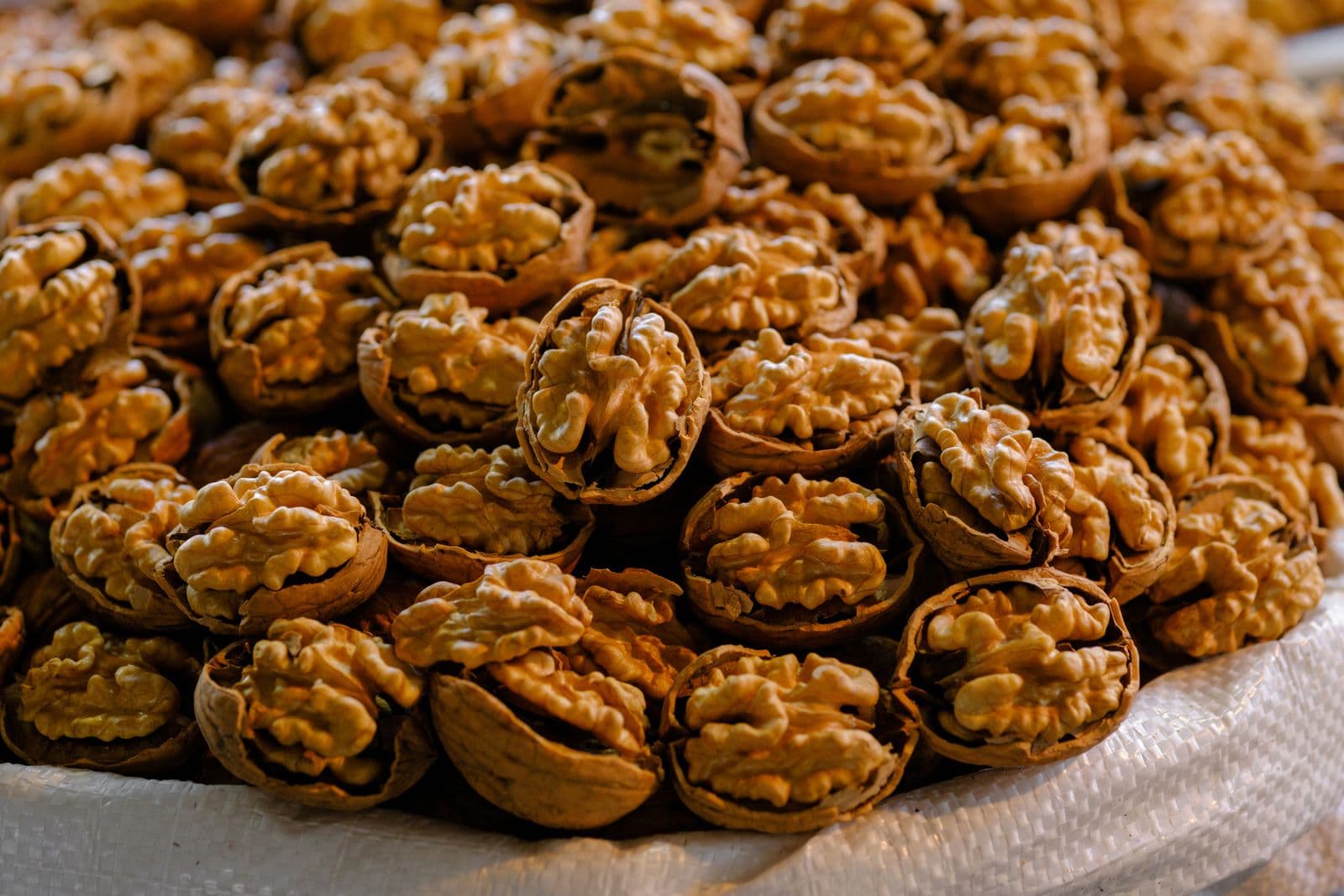
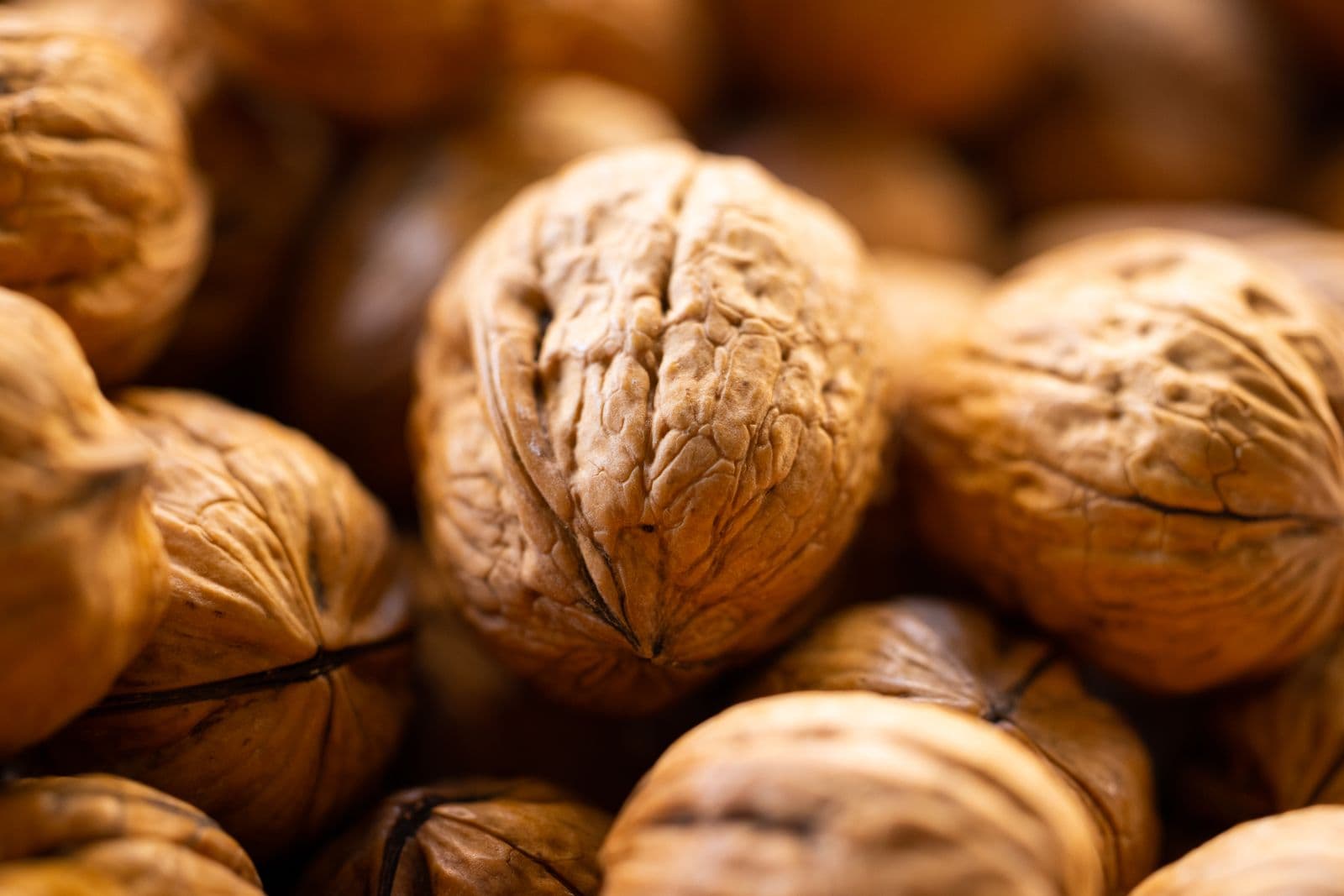
Walnuts are picked in early autumn in orchard villages across the valley. They are knocked from the trees and gathered in sacks. Then they are dried in the sun and cracked by hand, and the sorting begins: by the shell for walnuts sold whole, and by the colour of the kernel for those sold shelled.
The palest kernels, kept whole, become light halves. Darker ones, with a richer taste, become amber kernels. Thin-shelled Kagzi walnuts stay in their shells. Our guide to Kashmiri walnut grades explains each name, and they are all in Harud Harvest.
Almonds and the rest of the orchard
Almonds come from the valley's orchards too, and in many homes they are part of the cold months: soaked overnight, slivered into kahwa or ground into sweets. Together with walnuts, they are what most people mean by Kashmiri dry fruits.
Saffron in Pampore
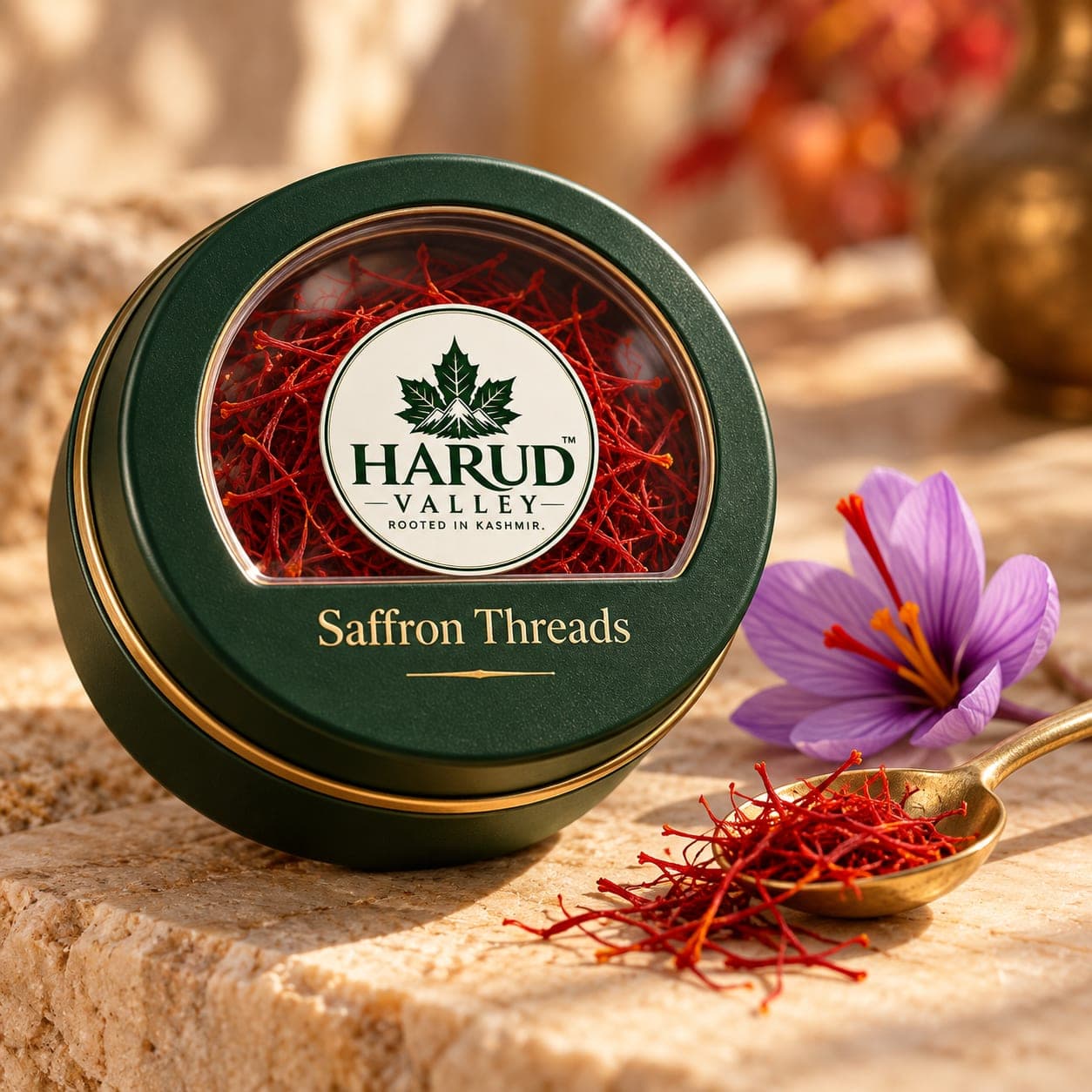
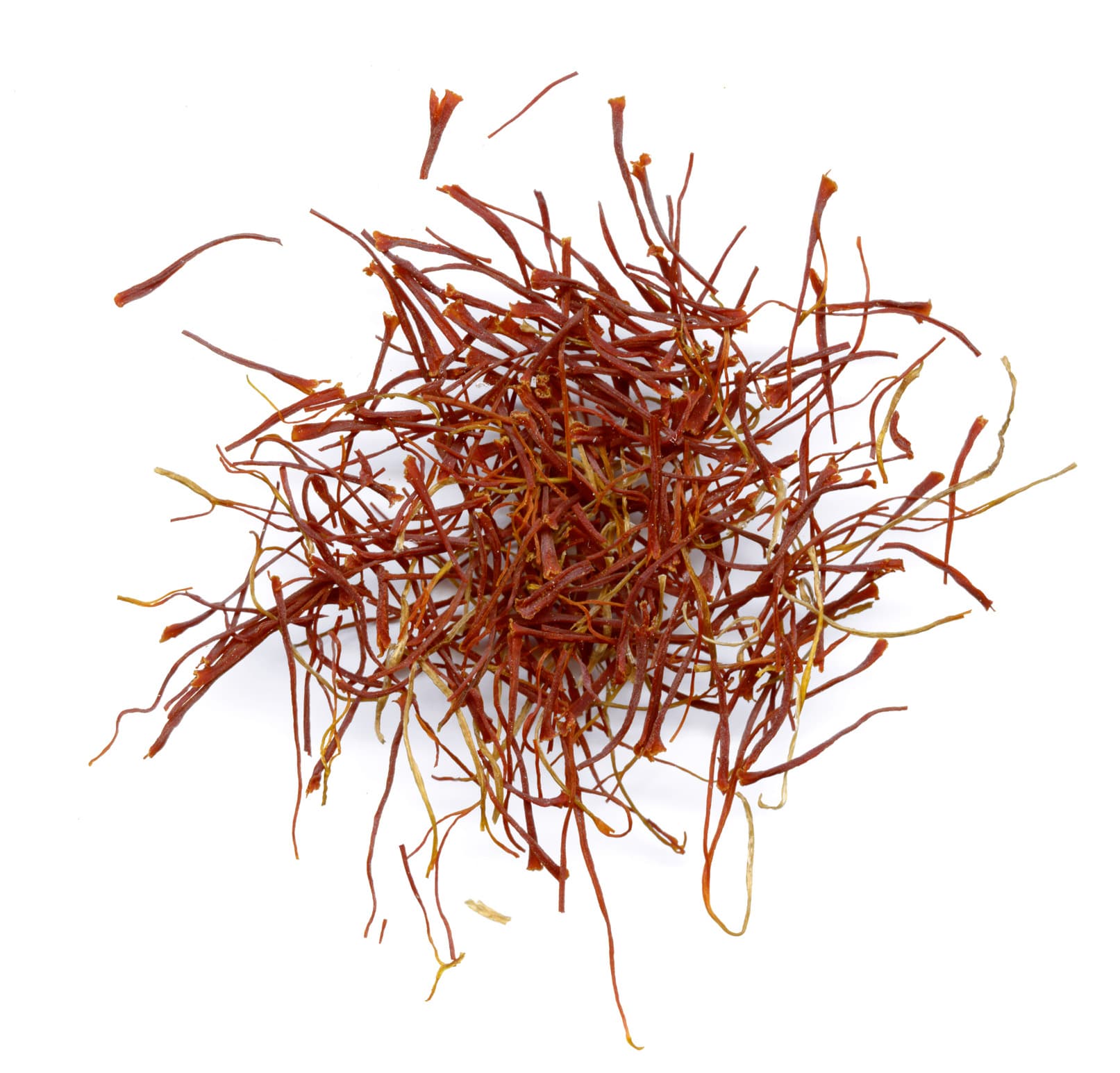
The last crop of the season is saffron. Around Pampore, about 15 km southeast of Srinagar, crocus fields cover the raised karewa plateaus. They bloom purple from late October, for only a few weeks each year. Each flower holds three red stigmas, and each one is picked by hand. Kashmiris call the saffron flower kong posh.
Local legend tells of two Sufi saints, Khwaja Masood Wali and Sheikh Sharif-ud-din Wali, who fell ill while travelling through the valley in the 12th century. A local chieftain cared for them, and when they recovered they gave him a single saffron bulb in thanks. The fields of Pampore are said to have grown from it.